This is going to be a short but sweet August Entry for my blog. Since I’d mentioned quality in the last month’s blog, I figured it was about time to share more of my Tallow making process, so we are going to cover Rendering.
Rendering is the important process in the Tallow Lotion production process where we take our raw product (Kidney Fat) and we clean it up into a usable clean cosmetic fat base (Suet). This process can look different for any business which is why it’s important for my supporters and customers to know HOW I do it and WHY I do it the way I do.
Step 1: When I get my kidney fat if often comes in bags varying in size based on the size of the cow. Kidney Fat can be frozen for up to a year before being processed into Suet. So I thaw my bags first depending on the size of a batch I want.
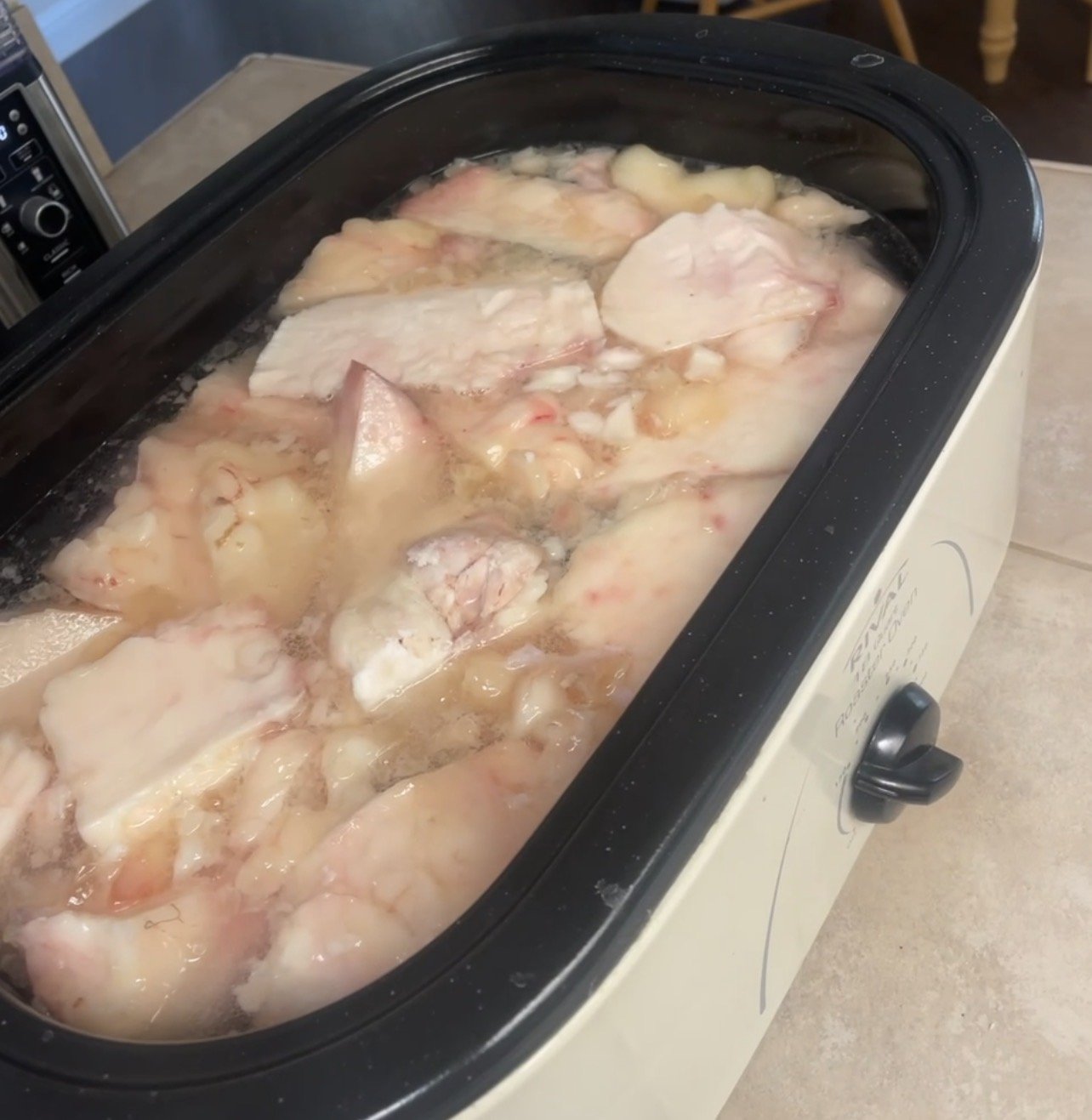
I render in Large 26 Qt Roasters, small enough that I can keep a good eye on quality but just large enough that by the end of the process It gets be about 10 lbs of pure suet to make into lotion. I also couldn’t lift them if they were much bigger either. One thawed I will clean up the kidney fat as necessary, while it’s mostly dense chunks I will occasionally get some with a bit of red meat attached or some thick dry membrane that easily peels off the chunk of fat.
Step 2: Once cleaned up it gets put into the roaster with about a gallon and a half of water and a cup of baking soda. I add the soda to help mitigate the smell for myself but can also help the fat itself get rid of any unwanted smells. This first render takes the longest and is also the smelliest, so I render it outside in our backyard. the temperature is kept at a low 200 or 250 degrees fahrenheit. I keep an eye on it, stirring it every few hours and often leaving it out overnight.
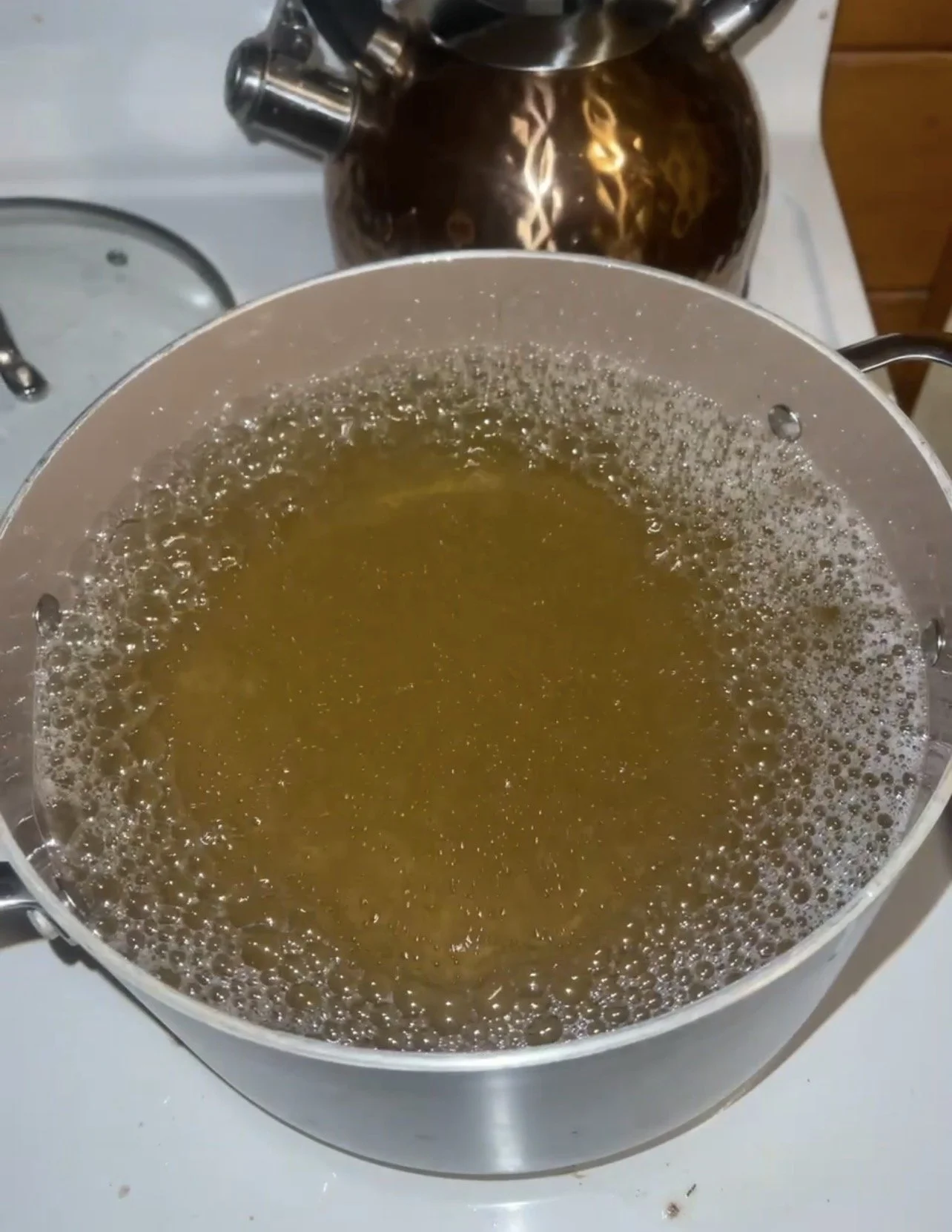
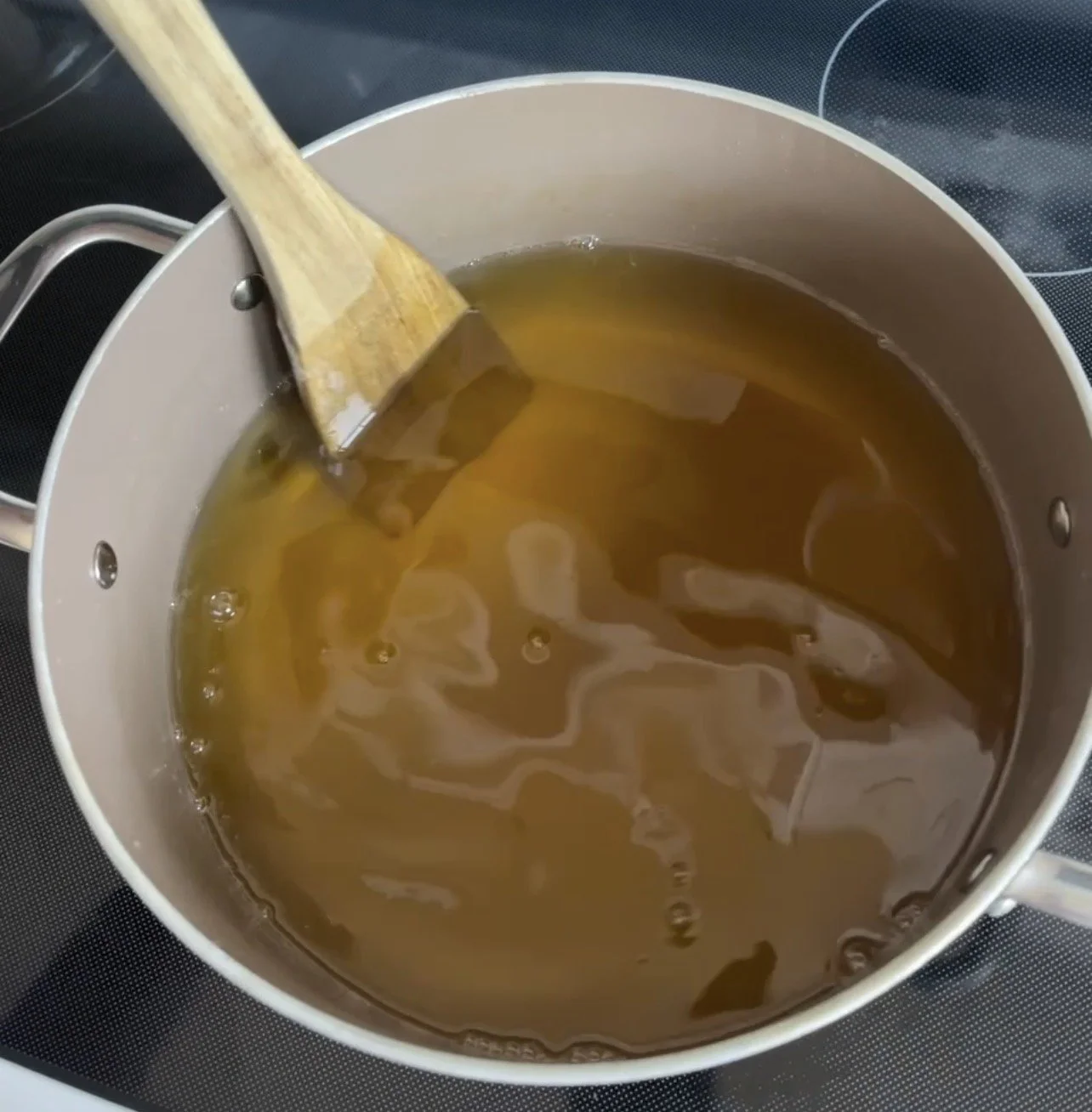
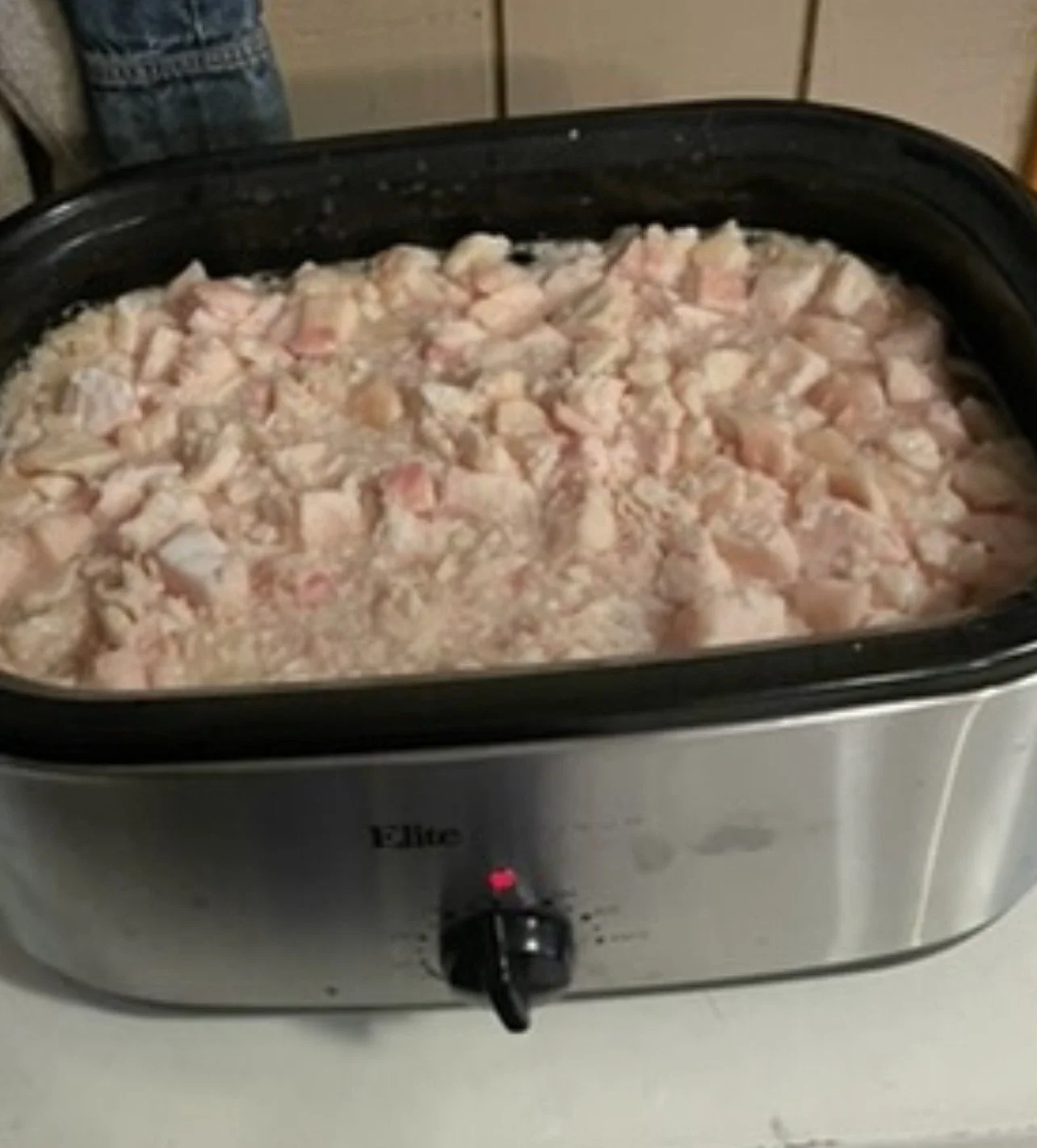
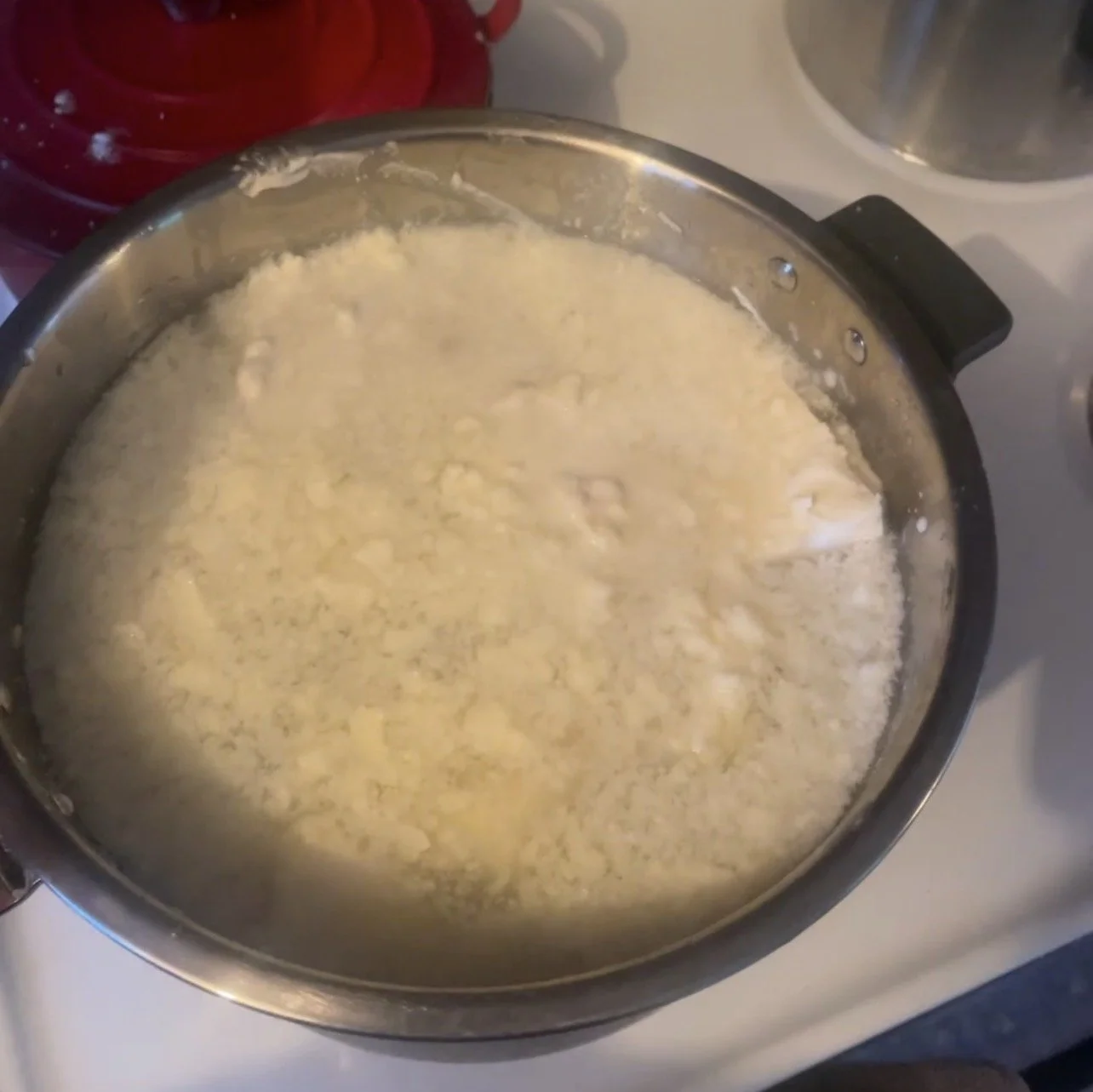
Step 3: After 18-24 hours of slow heat rendering the batch is ready to be sifted through a cheesecloth to catch any impurities or slimy membrane or other debris that might have attached itself. It’s still pretty stinky at this point. but I let it cool down to room temperature and you would see it start to solidify. Once at room temperature I let it cool overnight inside my fridge.
Step 4: This is going to be the second round of wet rendering. After an overnight in the fridge the Tallow has separated itself from the water, but the even cooler part is somehow all the icky dirtiness in the tallow that got melted and mixed with the water stayed with the water and not the tallow, this is how it manages to get cleaner and cleaner with the additional rendering rounds. So you cut your tallow out of the bowl or pot and scrape any other slime or non-solid clay like substance from the bottom and into the trash. The solid tallow gets put back into a roaster pot with new clean water. The old water gets dumped (This first batch of water, especially after a night in the fridge can be gray, sludgy, gelatinous, and horribly smelly so I find a corner outside to dump it into instead of down my sink or into the trash.)
This second rendering also includes salt which further helps the purification process of the tallow and is still rendered at a low 200 degree temp.. And unlike the first rendering where you have to wait for all the little kidney fat chunks to melt you only have to wait for this tallow to fully melt in the water which rarely requires an overnight. So once melted it gets re-poured into a pot, left to settle at room temperature and then again is left for an overnight in the fridge.
Step 5; Basically the third wet render repeats step 4 but with cleaner water when you remove the tallow from the pot. And you just melt it one more time in clean water with nothing else added. A note I will add here is that the rendering process works as a home business for me because I can essentially wait to get to it until I’m ready. It’s not very time consuming or consistency demanding. I Don’t HAVE to take care of the tallow as soon as it’s melted in the water, It can stay on a low heat for as long as 12-36 hours (Which I have done before). And it doesn’t HAVE to be cut and re-rendered after a night in the fridge. It can also be left to solidify in the fridge as long as you want. (I’ve had a pot in the fridge that I didn’t deal with for a week.)
Step 6: Once you’ve melted and re-solidified the tallow three times over with the last time being with clean water. You can see that once left to solidify the water that separates is virtually still clean and clear with minimal cloudiness. This means your tallow is clean and ready for a dry render.
Step 7: A dry render helps ensure that you don’t make tallow lotion with water content that could cause the lotion to mold or go rancid (I learned this the hard way). This is probably the most hands on of the rendering process. You basically melt the solid suet in the roaster with no water. This needs to be done at the same low 200 degree temperature or you risk the fat burning and smoking up the place and'/or the water content that needs to evaporate is stuck under the weight of the melted fat which can cause little explosions once enough pressure builds up to pop the water to the surface. SO to avoid these little pressure explosions you needs to be stirring every 10 minutes to bring the hot water to the surface to evaporate. This should/could take anywhere between 4-8 hours. (Which is why it works great for me to work from home.) Then you let it come back to room temperature and the refrigerate overnight once again.
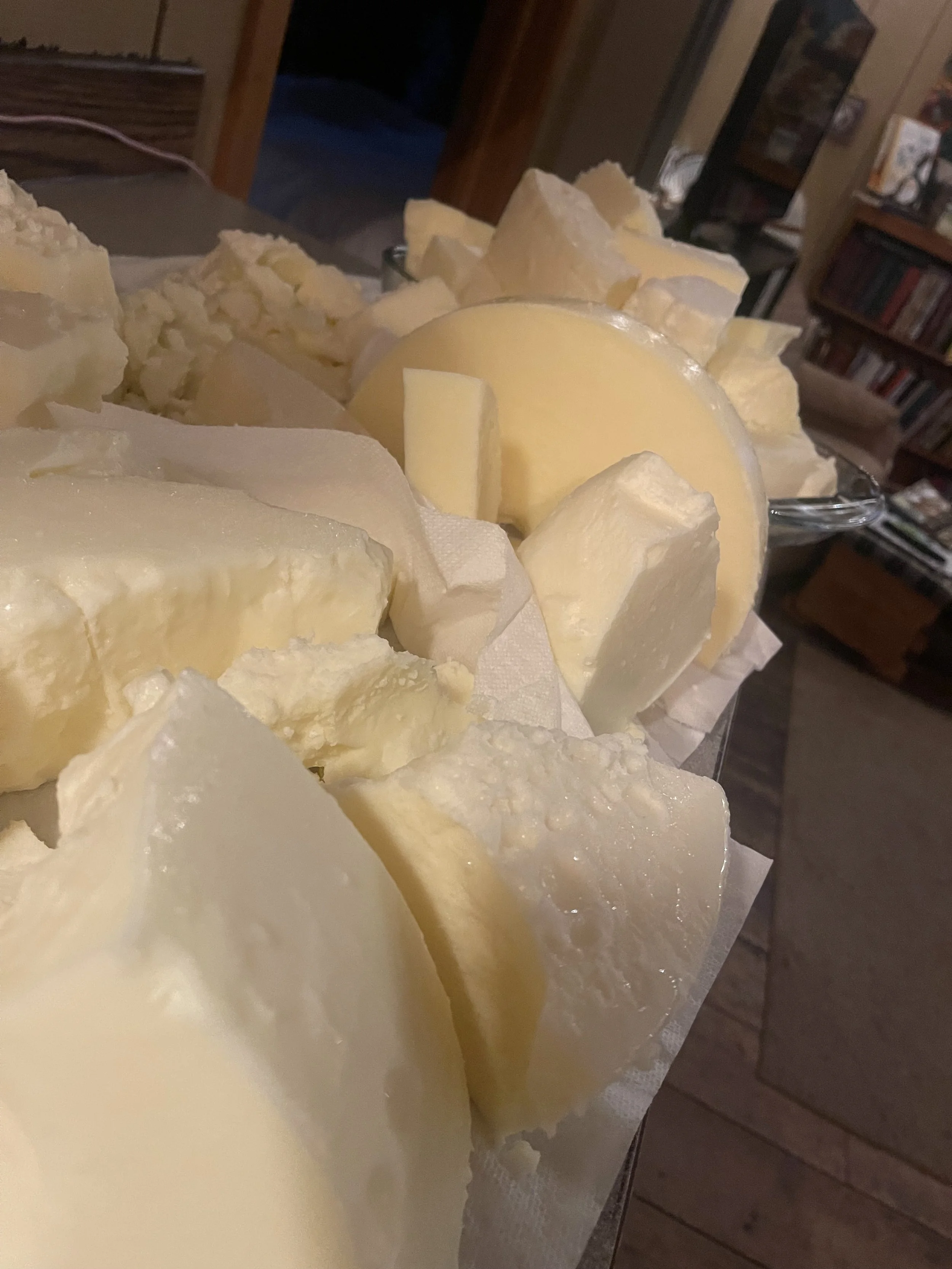
Step 8: Once the Suet block has been refrigerated overnight, dump the block onto a towel and let it come to room temperature once more. This will make the Suet “sweat” or let the last residual bits of water come to the surface and you can dab it away.
Step 9: Your tallow at this point is ready to be made into lotion. For the smoothest and least grainy texture I have found that the best way to start….Will be shared with my Tallow Making process blog that will come out in October!
This turned out to be a bit longer than I expected, but I hope you enjoyed and I always love getting questions and comments from all of you if you have any follow-up inquiries.