Do you identify as crunchy, holistic, and non-toxic with an occasional tilt towards organic when possible? Can you relate to a predicament I often find myself in? I’ll be in a store and when considering a purchase I will sometimes buy the more expensive product purely because I’m convinced that it must be higher in quality. Anyone?

That’s why this month’s blog content makes me quite the hypocrite. But a hypocrite with a very important message: When it comes to tallow skincare, bigger doesn’t automatically mean better—and a higher price tag certainly doesn’t guarantee a higher-quality product. The growing popularity of tallow has brought countless brands into the market. But the most important question isn’t how many followers a company has or how expensive its packaging looks. It’s what kind of tallow is actually inside the jar!?!?
Consumers should look for brands that are transparent about their sourcing, the specific type of fat they use, and their rendering process. A quality tallow company should be able to tell you where they source their fat, what kind they get and how it’s processed and rendered. Transparency—not popularity—is what should earn your trust.
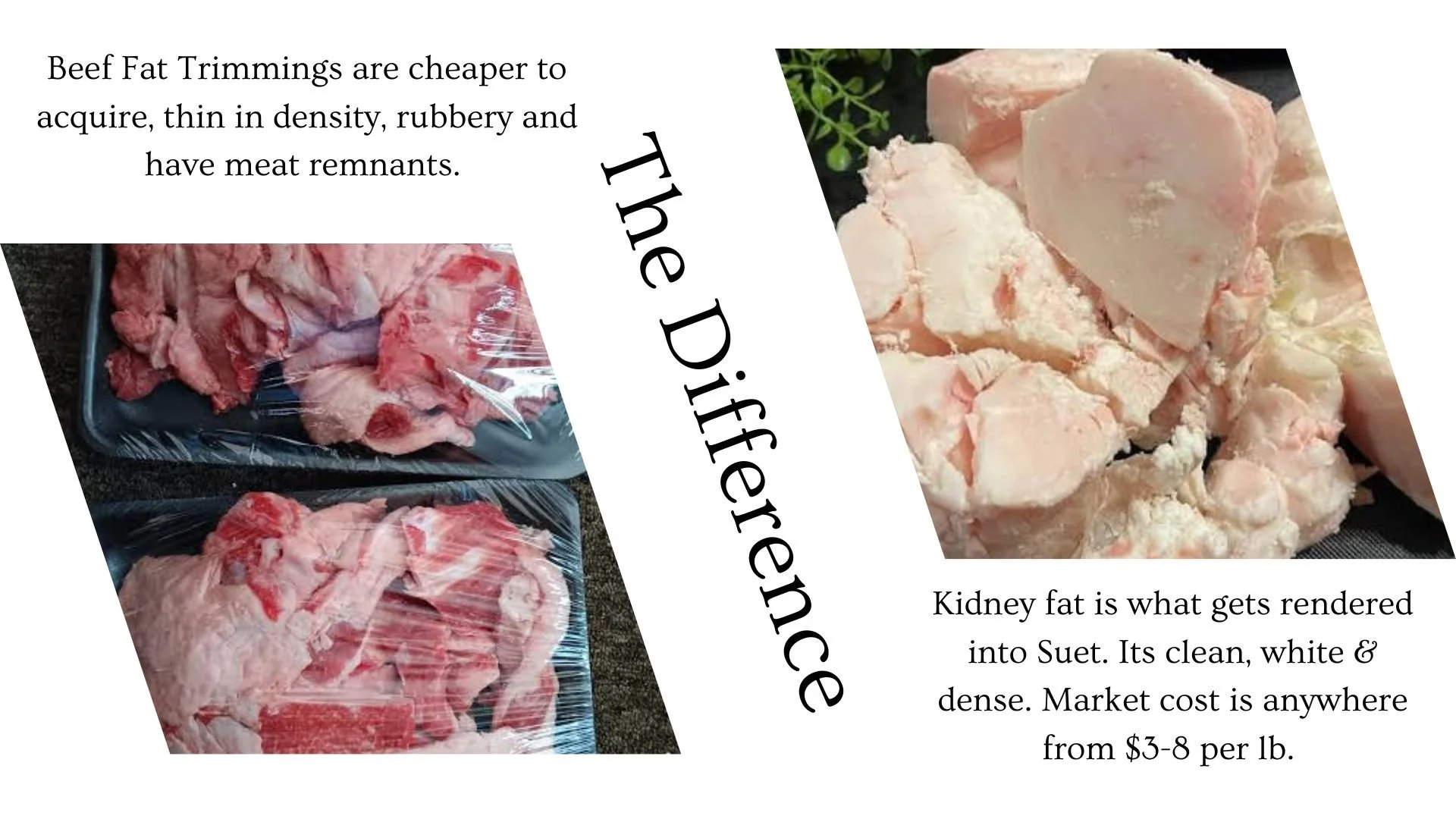
Not all beef fat is created equal. Tallow can be rendered from various types of bovine fat, including exterior trim fat and the dense interior fat surrounding the kidneys, commonly called suet or kidney fat. Many tallow skincare makers attempt to use pure kidney suet as their preferred raw material because it is prized for its purity, consistency, and naturally firm fatty-acid profile. But with the growing demand for specifically well-sourced kidney fat, larger companies will substitute with beef trim fats which generally affect the nutrient density of the lotion. Many do this to stay within their production price-point. When shopping for tallow skincare, don’t be afraid to ask questions: Does the brand specifically say “suet” and “kidney fat”? Is the tallow grass-fed and grass-finished? Is the source traceable? Is the ingredient list simple and transparent? If a company can’t clearly answer those questions, you may be paying for marketing rather than ingredient quality.
That is one reason we believe small businesses deserve a place in your skincare routine. Smaller makers can often purchase ingredients directly, make products in smaller batches, and maintain hands-on control over sourcing and production without the same overhead costs associated with massive advertising campaigns, retail markups, elaborate packaging, and large corporate operations. That can allow a small business to put more of the cost of your purchase into the ingredients themselves rather than the brand image surrounding them. And remember: expensive does not automatically mean premium, just as affordable does not automatically mean low quality. Read the label, ask where the tallow comes from, and choose businesses that are willing to show you exactly what you are putting on your skin. At the end of the day, the best tallow isn’t determined by the size of the company—it’s determined by the quality, sourcing, processing, and transparency behind every jar.